RBE
Year
2022
Service
Brand Identity - Rebranding
Client
RBE - Rede de Bibliotecas Escolares (Network of School Libraries)
Question
How can an institutional brand with over 30 years of history refresh its identity to communicate with an audience that includes children, teenagers, parents, and teachers, while maintaining the credibility required to stand alongside other public institutions?
Goal
Develop a rebranding proposal for an established institution whose communications team, despite having a strong emotional connection to the existing identity, recognised the need to modernise its visual language.
Process
The project began with a review of the existing logo, informed by observations shared by the institution's communications team. The stylised "RBE" letterforms reduced legibility and gave the identity a formal, rigid character.
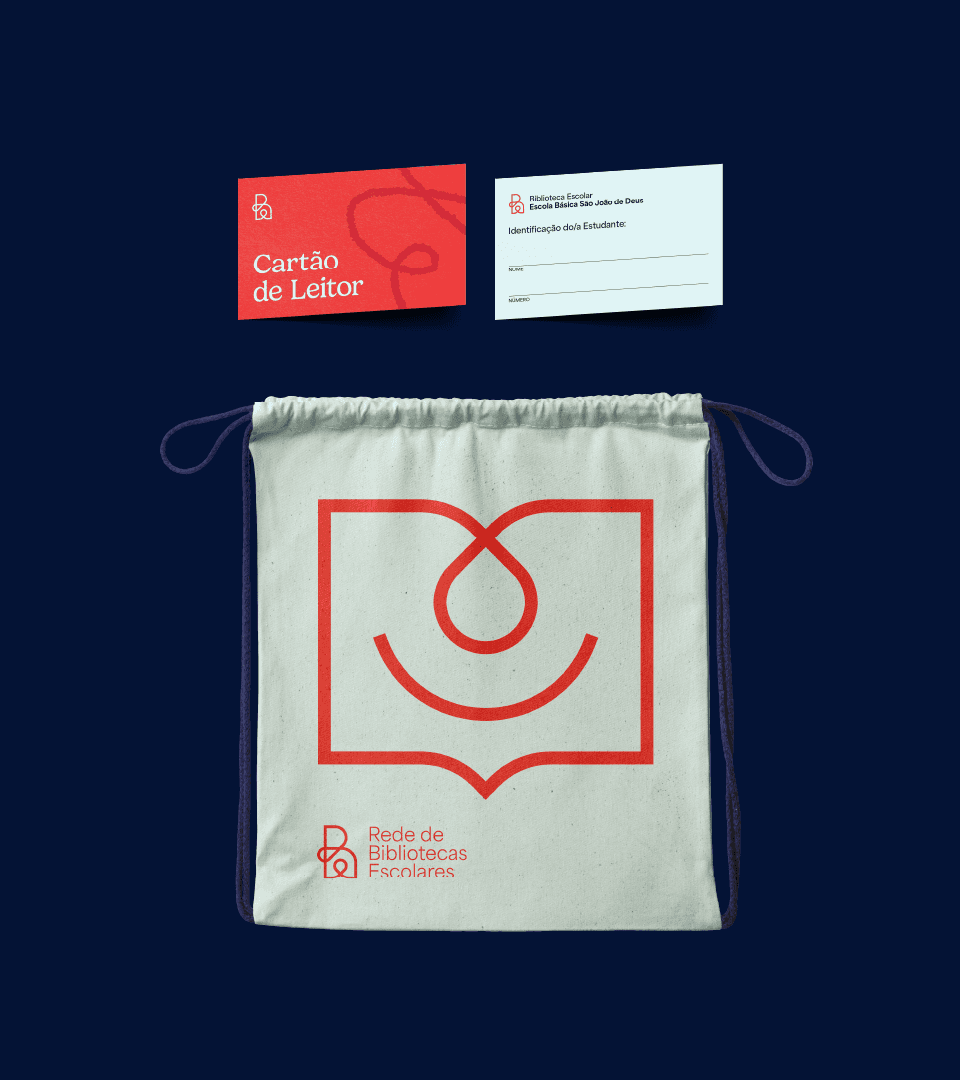
The new proposal draws from the curved strokes and expressive qualities of cursive handwriting, creating a visual language closely associated with school, learning, and the act of writing. Using the brand's initials, I developed a clean yet playful monogram whose intertwined form alludes to the idea of a network—the organisational principle at the heart of the institution.

The colour palette was refreshed to strengthen the visual identity and improve its presence across digital platforms.
Building on the same formal language as the logo, I also developed two complementary graphic systems: a set of illustrations and icons designed to make the identity more approachable for younger audiences, and a generative pattern system inspired by pencil marks, used to enrich applications while introducing a sense of imperfection and humanity into the brand.




Takeaway
At the end of the process, after reviewing the rebranding proposals, the RBE team expressed a strong attachment to the existing identity. Several members had been involved with the institution since its foundation and had witnessed the creation of the original brand, ultimately leading to the decision not to move forward with the redesign.
Even so, as an academic project, it proved to be a valuable experience in collaborating with a real client while navigating the emotional dimension that often accompanies institutional design projects. It reinforced the idea that design is not only a technical discipline, but also a symbolic one—deeply connected to the people behind an organisation and the meaning they associate with its identity.
